DIY Magnetic Spice Racks for Rattle-Free Van Life Storage
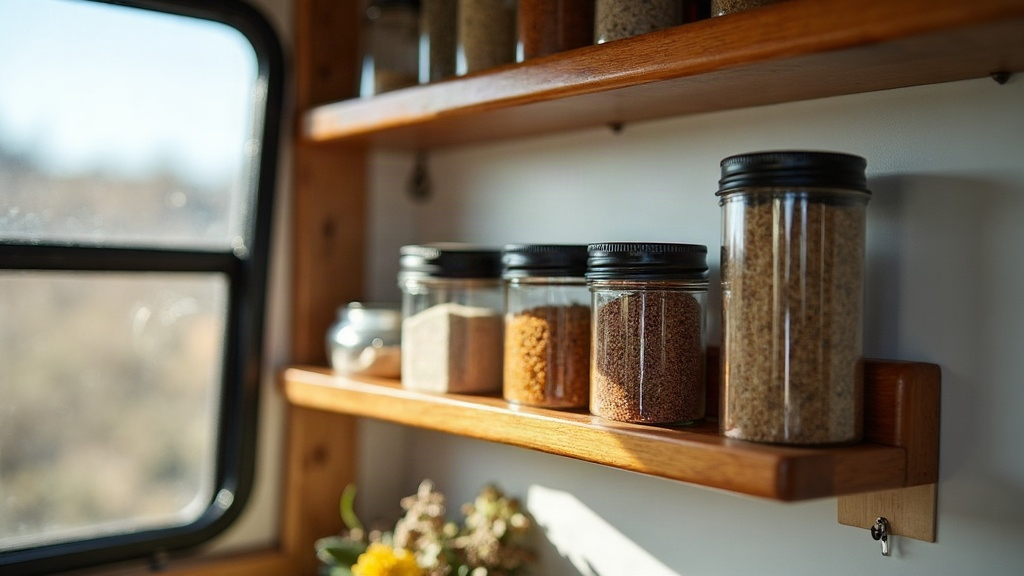
If you’ve ever bounced down a washboard road with a loaded spice drawer, you know the soundtrack already: glass jars rattling like maracas, lids working themselves loose, shakers tipping over and rolling into corners. A DIY magnetic spice rack fixes this at the root. It locks every jar to a steel surface with real holding force, so there’s no rattling, no turmeric dusted across your cutting board, no fumbling through a drawer while your rig shudders over corrugated dirt at 40 mph. Below is a build that actually holds up on rough roads, plus a broader strategy for rattle-free kitchen storage in any van or RV.
Why Normal Spice Storage Fails on Washboard Roads
Washboard roads don’t jolt you once like a pothole does. They vibrate fast and repetitively, and that rhythm is brutal on loose storage:
- Jars creep toward the edge of a shelf, one tiny bounce at a time, until they go over
- Screw-top lids work themselves loose over hours of driving, and suddenly you’ve got oregano in your glove box
- Drawer organizers turn into noise machines as jars knock against each other nonstop
- Foam or felt liners wear through faster than most people expect, sometimes within a single season of regular use
Cabinet latches and non-slip mats are fine for cornering and hard braking, but they do nothing against the continuous micro-bounce of washboard terrain. What you actually need is a method that physically couples each container to the vehicle’s structure. That’s exactly what magnets do.
Materials You’ll Need
- Flat steel sheet or steel strip (galvanized works well, around 24 gauge), mounted to a cabinet door, wall panel, or backsplash
- Small, strong magnets, 3/4” to 1” neodymium discs rated for at least 8-10 lbs of pull each
- Magnetic spice tins, either steel-bottomed tins or regular jars with a magnetic adhesive disc stuck to the base
- Construction adhesive or E6000 glue (skip hot glue, it softens and fails once the cabin heats up)
- Clear coat or marine-grade sealant to guard against humidity and the inevitable grease film near a stove
- Chalkboard or label stickers so you can actually tell cumin from coriander at a glance
Step-by-Step Build
1. Choose a Vibration-Dampened Mounting Surface
Pick a solid substrate, like a cabinet door backed by plywood, not a thin laminate panel that flexes under pressure. A flexing panel doesn’t absorb vibration, it amplifies it, turning your spice rack into a drum.
2. Secure the Steel Sheet Properly
Run construction adhesive across the entire back surface, not just the four corners. A sheet glued only at the edges will buzz and rattle on washboard roads even before you’ve loaded a single jar onto it.
3. Attach Magnets to Jar Bottoms
Glue a magnetic disc to the base of each tin and give the adhesive a full 24 hours to cure before you load anything. A half-cured bond is, hands down, the number one reason jars pop off mid-drive.
4. Test Before You Trust It
Load the jars to a realistic weight, mount the rack, then shake it hard with your own hands in several directions. If anything shifts under that kind of abuse, it will absolutely fail on real washboard. At that point, add a second, smaller magnet or upgrade to a stronger grade before you’re anywhere near a rough road.
5. Add a Containment Lip (Optional but Recommended)
A thin raised lip of wood or aluminum along the bottom edge catches any jar that does break free, so it lands on the lip instead of your stovetop or the floor.
Beyond Spices: Rattle-Free Kitchen Storage Principles
The same thinking applies to the rest of your galley:
- Use friction, not gravity. A non-slip liner paired with a physical lock (latch, strap, magnet) beats either one used alone.
- Pad any hard-on-hard contact point. If you’re hearing glass-on-glass or metal-on-metal clinking, you’re almost certainly missing a felt pad or silicone spacer somewhere.
- Group by weight, not just category. Cast iron and canned goods belong low and centered over the axle; lighter items can live higher up.
- Run a pre-trip shake test. Before any long stretch of rough terrain, open every cabinet and shake the van by hand. It costs you two minutes and saves you a mid-drive mess.
Frequently Asked Questions
Will magnets affect a gas stove or induction cooktop? No. Standard neodymium spice magnets are far too weak, and sit far too close to the jar and far from the appliance, to interfere with stove electronics or induction fields.
Do magnetic racks work on wood cabinets? Only if you install a steel backing sheet first. Wood has zero magnetic pull on its own, so that steel plate isn’t optional, it’s the whole mechanism.
How many jars can one rack hold safely? Size the steel sheet to however many jars you actually own, and keep stacks to 2-3 jars high per magnet point. Overload a single thin strip and you’re inviting sagging, or worse, a jar coming loose at the worst possible moment.
Final Thoughts
A well-built magnetic spice rack is more than a tidy kitchen upgrade. It solves one of van life’s most persistent daily annoyances, the kind that doesn’t ruin a trip but wears you down one rattling jar at a time. Pair it with smart weight distribution and that quick pre-trip shake test, and washboard roads stop being a threat to your cookware. They just become another stretch of road.