Composting Toilet vs Cassette Toilet for Stealth Urban Winter Camping
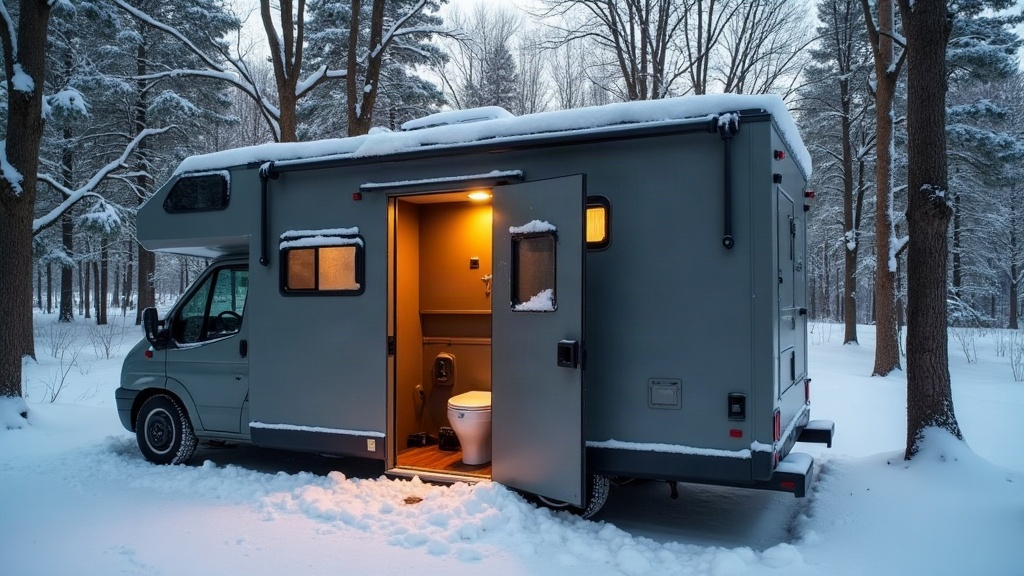
If you’re parked on a quiet city street in January, the last thing you want is a toilet system that freezes solid, stinks through your cracked window, or forces you into an obvious 2 a.m. dump run. For winter stealth urban camping, a composting toilet generally wins on smell control and freeze resistance, while a cassette toilet wins on upfront cost and simplicity. Still, the right pick depends on where you park, what you can spend, and how much maintenance you’re willing to put up with.
Why Winter Changes Everything
Summer stealth camping forgives a lot of sloppiness. Winter doesn’t.
- Liquids freeze in holding tanks below 0°C (32°F), and that can crack a cassette tank outright.
- Condensation builds up fast inside a sealed van, which makes ventilation (something composting toilets need) a lot trickier to manage.
- You can’t just crack a window and “air it out” at a rest stop without drawing attention.
- Public dump stations get closed, frozen over, or buried in snow exactly when you need them most.
Both systems have real failure points once temperatures drop. Here’s how they stack up against each other in practice.
Composting Toilets in Winter
Composting toilets separate liquids from solids. Solids drop into a bin with a carbon additive (coco coir or peat moss), while liquids go into their own jug.
Pros for stealth winter camping:
- No chemicals, and no sloshing liquid tank sitting there waiting to freeze and split open
- Solids barely smell when the fan’s running and the coir is managed right
- The liquids jug stays small, and you can empty it almost anywhere discreetly. Even something coffee-cup sized works fine for a short trip
- No hunting for an RV dump station. You can empty liquids into any public restroom, no questions asked
Cons:
- Needs a 12V fan running nonstop, which eats into the same battery capacity your heater needs
- The urine jug will still freeze if you leave it in an unheated van overnight in deep cold. You have to bring it into your living space to keep it liquid
- Costs more upfront ($250 to $1,000 for brands like Nature’s Head, Separett, or Trelino)
- Eats up more floor space than a cassette does
Cassette Toilets in Winter
A cassette toilet is basically a small portable chemical toilet: holding tank on the bottom, flush-water tank up top, and you empty the whole thing at a dump station or vault toilet.
Pros for stealth winter camping:
- Cheap ($80 to $250) and dead simple. No electricity, no fan, nothing to learn
- Fully sealed, so odor stays contained short-term as long as the chemicals are fresh
- Small footprint, easy enough to tuck under a bench or stash in a wet bath
Cons:
- The flush-water tank and waste cassette WILL freeze below freezing unless they’re sitting in a heated compartment
- Frozen cassette contents can crack the tank or jam the slide valve, and that’s not a cheap fix
- Chemical additives (formaldehyde-based ones especially) are a pain to dispose of quietly. Plenty of dump stations reject “blue chemical” waste outright, and many close for the season anyway
- Emptying means finding an open dump station or vault toilet, which is genuinely hard to pull off quietly in a city during winter
Side-by-Side Quick Comparison
| Factor | Composting Toilet | Cassette Toilet |
|---|---|---|
| Freeze risk | Low (if jug brought inside) | High (tank cracks) |
| Smell control | Very good with fan + coir | Good short-term, worse over days |
| Upfront cost | $250–$1,000 | $80–$250 |
| Emptying discretion | High (any restroom) | Low (needs dump station) |
| Power draw | Fan required (~1–3W) | None |
| Stealth footprint | Larger unit | Smaller unit |
Practical Winter Tips Either Way
- Insulate your water sources. Whatever toilet you run, keep any liquid-holding part inside your insulated living area, not tucked away in an exterior compartment.
- Empty more often in winter. Shorter intervals mean less volume sitting around if something does freeze on you.
- Carry a backup. A simple bucket with a tight lid and some pet-waste bags will save your night if the main system fails in a hard freeze.
- Mind your battery draw. Composting toilet fans are competing with your heater and electric blanket for the same battery capacity, so size your solar setup with that in mind.
- Test before committing. Run a bucket-and-bags setup for a week before you drop $600+ on a permanent system. You might learn something about your own habits first.
Which Should You Actually Buy?
- Go with a composting toilet if you’re camping long-term, discretion matters more to you than finding dump stations, and you can handle the fan’s power draw.
- Go with a cassette toilet if money’s tight, your trips are short, and you’ve got somewhere heated to store it (or you empty it before a hard freeze hits).
Conclusion
For genuine stealth urban camping in winter, a composting toilet offers better smell control and a lot less freeze risk, which makes it the stronger long-term pick despite costing more upfront. A cassette toilet still holds up as a solid budget choice for shorter trips or milder winters, as long as you stay on top of the freezing risk. Whichever one you go with, build your emptying routine around discretion and cold-weather logistics. That’s really what separates a good winter stealth setup from a bad one.