Fixing Plywood Cabinet Squeaks with Felt Tape & Pocket Screws
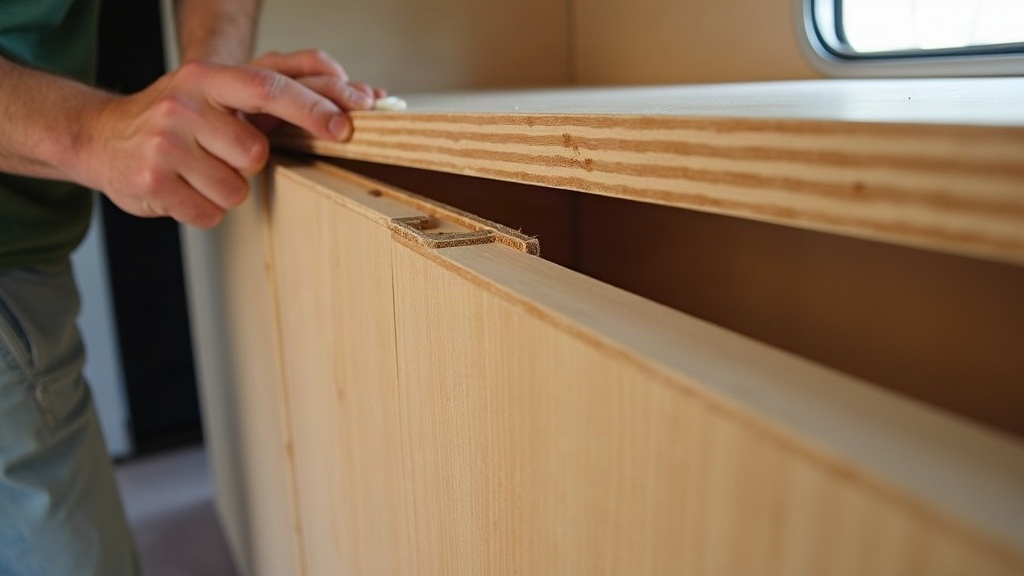
If your plywood cabinets squeak, rattle, or creak every time you hit a washboard road, the fix is usually cheap and fast: isolate the vibration with felt tape and tighten the structure with pocket hole screws. This combo clears up nearly every common cabinet noise in RVs, trailers, and off-grid cabins, and you won’t need to tear anything apart to do it.
Why Cabinets Squeak on Washboard Roads
Washboard roads don’t deliver one big jolt. They hammer your rig with thousands of tiny vibrations per mile, and plywood cabinets handle that punishment poorly for a few reasons:
- Wood-on-wood contact points (doors against frames, shelves against sides) vibrate and rub against each other.
- Loose butt joints flex slightly with every bump, especially on cabinets that were only glued or brad-nailed at the factory.
- Screws back out gradually from constant micro-movement, and the gaps just keep widening.
- Face frames separate from the box by a hair, which creates that hollow knocking sound you can’t quite place.
A single rough road trip can expose weaknesses that months of smooth highway driving never revealed. The good news? Most of these problems sit right at the surface. You’re not looking at a rebuild.
Step 1: Locate the Actual Squeak Source
Don’t guess. Track it down. With the vehicle or trailer parked and stationary:
- Open and close every cabinet door and drawer slowly, listening for friction points.
- Push firmly on cabinet corners, face frames, and shelf edges to mimic what happens on a rough road.
- Have someone gently rock the rig (or drive slowly over a bumpy driveway) while you keep a hand on each cabinet and listen.
- Mark suspect spots with painter’s tape. Memory is unreliable once you’re three cabinets in.
Common hotspots: door-to-frame contact, where shelves meet side panels, and where face frames meet the cabinet box.
Step 2: Apply Felt Tape to Kill Contact Noise
Felt tape (sometimes sold as felt pads or anti-squeak tape) is the fastest fix for wood-on-wood rubbing. It’s a soft buffer that absorbs vibration instead of letting it turn into sound.
Where to apply it:
- Inside door frames where the door panel contacts the box
- On shelf edges resting against cabinet sides
- Along drawer slides where wood touches wood
- Behind hinges where plywood flexes against the frame
How to apply:
- Clean the surface with isopropyl alcohol first. Felt tape won’t stick to dust or grease, no matter how good the adhesive is.
- Cut strips to size with scissors (1/8” to 1/4” thick felt works best for cabinets).
- Press firmly and hold for 10 seconds. Adhesive-backed felt needs real pressure to bond properly.
- Test the door or shelf action right away. It should close with a soft thud, not a click or a squeak.
Felt tape alone clears up roughly 60-70% of cabinet noise issues, especially rattling doors and loose shelves.
Step 3: Reinforce Joints with Pocket Hole Screws
Felt tape handles friction noise, but it can’t fix structural flex. That’s a job for pocket hole screws. They pull joints tight and, unlike glue or finish nails on their own, they keep holding under repeated vibration trip after trip.
Where to add pocket screws:
- Face frame to cabinet box connections
- Where shelf supports meet the cabinet sides
- Corner joints that have already started to separate
- Loose cabinet-to-wall or cabinet-to-cabinet connections
Quick process:
- Use a pocket hole jig set for 3/4” plywood (standard cabinet-grade thickness).
- Drill at a slight angle into the back or underside of the joint, so it stays hidden from view.
- Use 1.25” coarse-thread pocket screws for plywood. Coarse threads grip better than fine ones in this material.
- Clamp the joint tight before driving the screw so you don’t create a new gap in the process.
- Add wood glue in the joint first for extra vibration resistance on corners that take the most abuse.
Pocket screws work well here because they build strong mechanical joints without any visible hardware on the cabinet faces. That matters if you care about keeping the finished look clean.
Preventing Future Squeaks on Rough Roads
- Recheck felt tape every 6-12 months. Adhesive wears down from heat and vibration cycles, even if it looks fine at a glance.
- Re-torque pocket screws annually. Plywood compresses slightly over time, loosening the bite.
- Add a thin bead of clear silicone at shelf-to-side contact points for extra cushioning if your rig sees a lot of rough road.
- Avoid overloading upper cabinets. Extra weight just amplifies the flex on washboard sections.
Conclusion
Plywood cabinet squeaks on washboard roads almost always boil down to two problems: wood touching wood, and joints that have lost their grip. Felt tape handles the first by cushioning contact points. Pocket hole screws handle the second by locking frames and shelves together for good. Put them together and you’ve got a lasting, low-cost fix that outperforms glue or nails alone, and honestly, you can knock out the whole job in an afternoon.